

Country Swing vs. Two-Step: Which Should You Learn?
Country swing and two-step are two of the partner dances you’ll encounter in Nashville, but they feel and function differently. Country swing is compact, flexible, and easy to adapt to different settings. Two-step travels around the floor and puts more emphasis on rhythm, timing, and navigating alongside other couples.
The right place to start depends on where you want to dance and the experience you’re looking for. Here’s how the two styles compare.
Country swing: a practical dance for a night out... or in
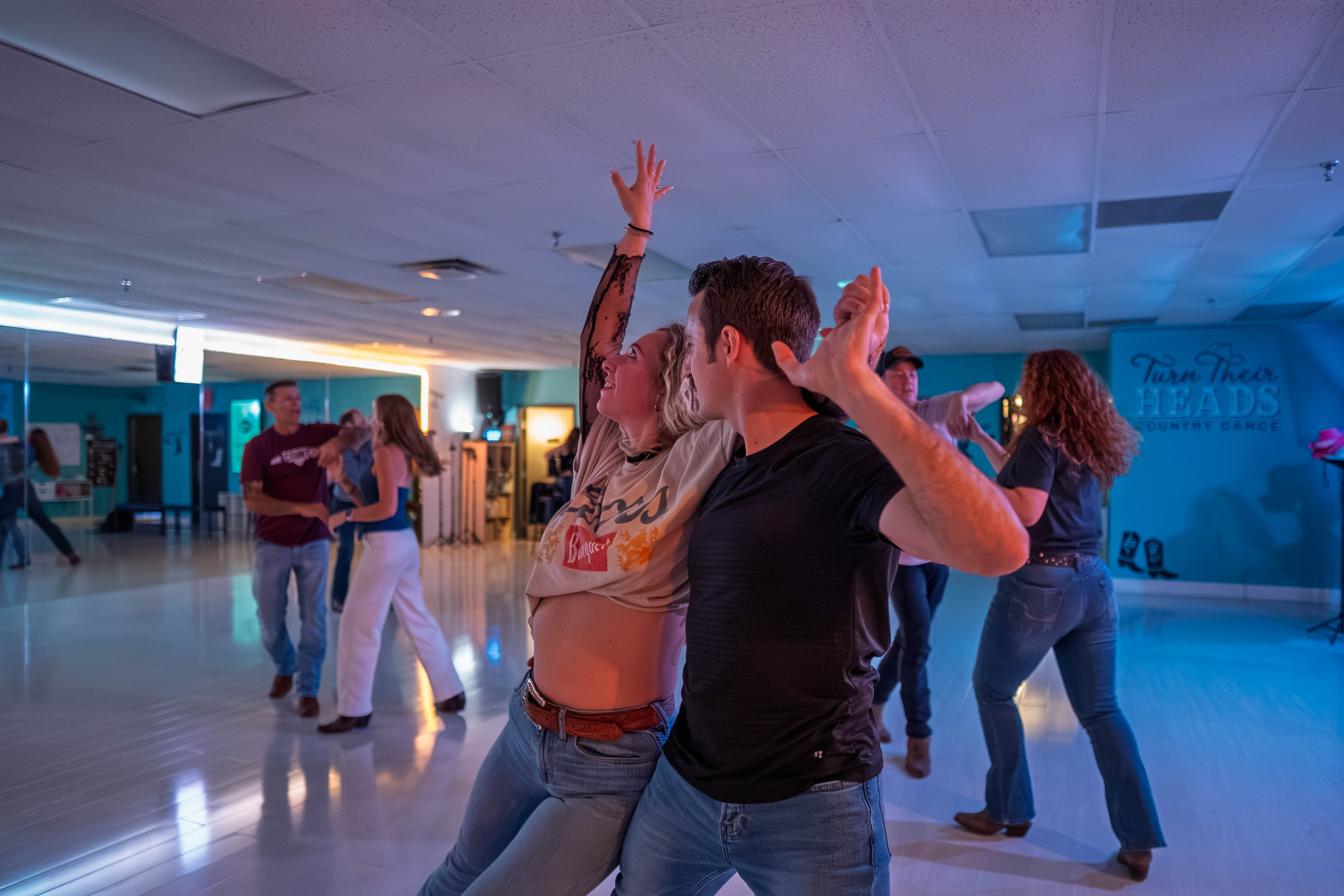
Country swing uses a simple foundation and a rotational pattern. Partners turn, change places, and move around one another within a relatively small area, rather than continually traveling around the room.
That makes it useful in crowded venues, at weddings, in smaller bars, and even in your kitchen. Its flexible structure lets you adapt to different partners and a wide range of music, so it’s a dance you can use beyond a traditional country dance hall.
Simple turns can grow into spins, dips, and more expressive patterns as you gain experience. You don’t need a long list of moves to enjoy it: a comfortable foundation and connection with your partner give you plenty to work with.
Movement: compact and rotational, with room to improvise.
Best settings: social gatherings, weddings, smaller venues, and open dance floors.
Why start here: an approachable foundation that adapts to many real-world dancing situations.
Explore our country swing and two-step lessons to compare current lesson options and find a starting point that fits your plans. If you’re local and want to build your skills over several weeks, the country swing fundamentals courses offer another starting point.
Two-step: a classic country tradition
Two-step is a traveling partner dance built around rhythm, timing, and smooth movement. Couples move around the outside of the floor along a shared line of dance, so it works best when there is enough room to keep moving.
It’s closely associated with traditional country music and dance-hall culture. If you picture gliding around a dedicated dance floor with a partner, two-step is likely the experience you have in mind.
Compared with country swing, it usually takes more time to become comfortable with the timing, navigation, and connection needed to move through traffic. You’re learning to dance with your partner while also paying attention to the couples around you.
Movement: progressive, traveling around the dance floor.
Best settings: traditional honky-tonks and larger dance halls with space for traveling dances.
What you’ll work on: rhythm, footwork, partner connection, and floor awareness.
Ready to try two-step? Visit our Partner Dance page to explore current country swing and two-step lesson options.
Which should you learn first?
Choose country swing if you want a practical social dance for crowded venues, weddings, and everyday opportunities to dance. Its compact movement and flexibility make it the more versatile starting point for many visitors and new social dancers.
Choose two-step if you enjoy traditional country music, want to travel around the floor, and plan to visit organized dance floors with space for progressive dances.